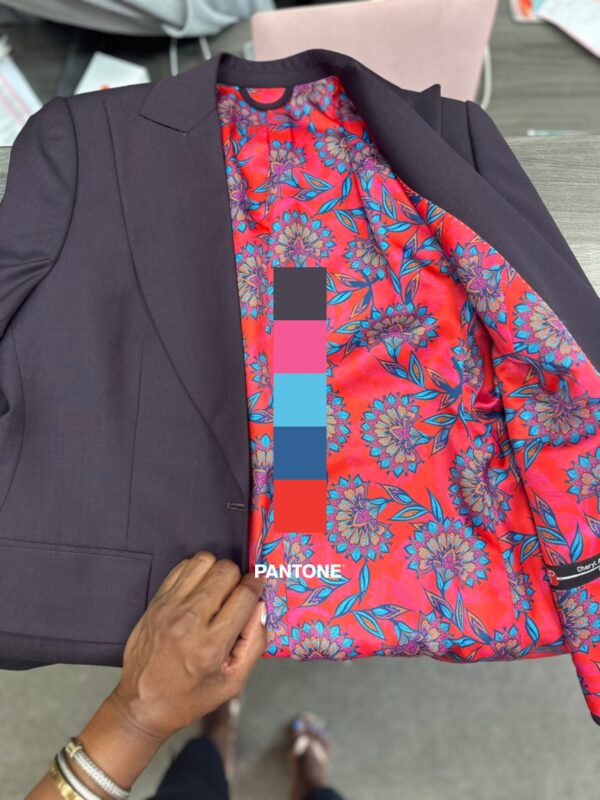
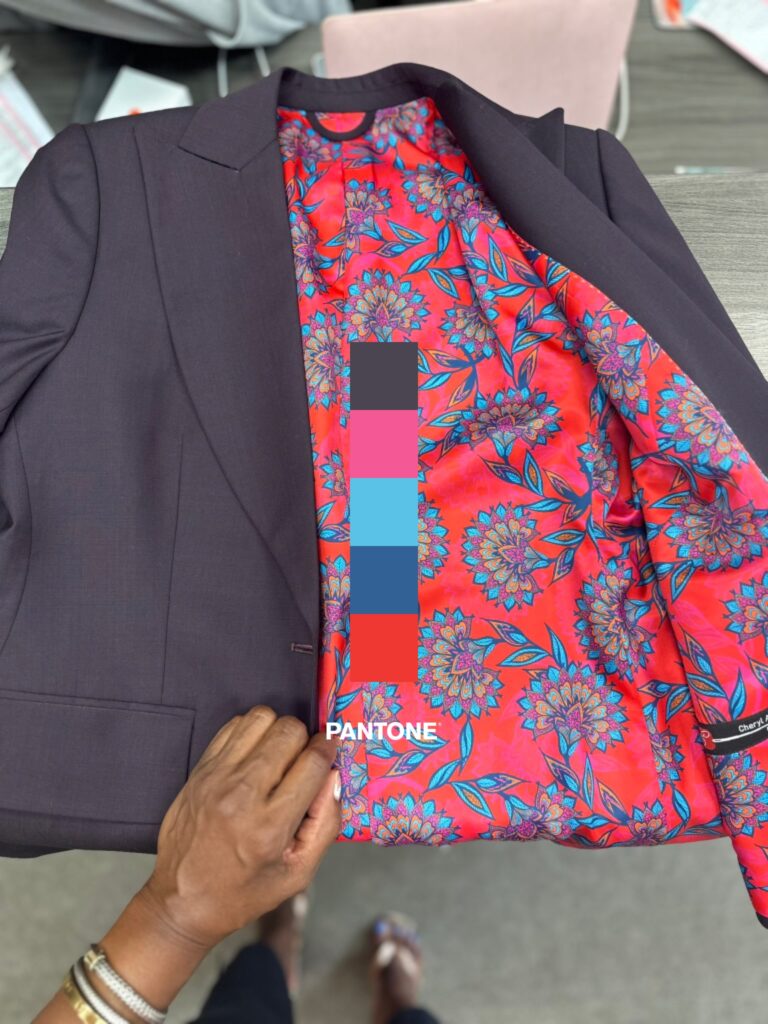
Making a custom blazer is about precision. Fabric, canvassing, structure, and fit determine whether a blazer holds authority over time or slowly collapses into mediocrity. Understanding construction changes how you shop, even when you’re not buying custom.
This is partly why I chose to go through the process of making a custom blazer with Cheryl Lofton & Associates. She is a longtime business partner, but she also did a heart-wrenching ‘come to Jesus’ with me because the blazer I had was due for retirement (smh)!

Given the need for a new blazer and a desire to deepen my understanding of what makes a garment work at the highest level, I petitioned Chery, a third-generation tailor, to help out. Once you understand what’s happening under the fabric, you can’t unsee it, and that knowledge makes you a far smarter buyer.
What Making a Custom Blazer Actually Involves
Most people shop from the outside in: color, cut, brand, price. However, making a custom blazer reverses that logic entirely.
Fabric selection comes first. Weight, weave, and recovery determine how a blazer drapes, how it wears over time, and whether it holds its shape after repeated use. In fact, fabric choice impacts longevity more than any other single factor. This matters because a blazer that loses its shape after six months delivers zero return, regardless of what you paid.
Next, structure vs. stretch becomes a critical distinction. Many modern blazers rely on stretch to mask poor construction. A well-made blazer uses internal structure – canvas, interfacing, and thoughtful engineering – to create shape that improves with wear rather than breaking down. For professionals wearing blazers multiple times per week, this distinction directly impacts how long your investment lasts.
Canvassing and internal architecture provide the backbone of authority. Full or partial canvassing allows the jacket to mold to your body, creating a personalized fit that no off-the-rack shortcut can replicate. This is where making a custom blazer truly differentiates itself from mass production—and why custom pieces often look better after years of wear.
Finally, fit decisions: shoulder expression, sleeve pitch, waist suppression determine how confident and intentional you appear. These details are subtle, yet powerful. They create the difference between looking dressed and looking decisive.
Why This Matters Beyond Custom
Understanding the process of making a custom blazer changes how you evaluate every blazer you encounter. Consequently, you stop overpaying for poorly constructed pieces. You recognize quality instantly. You invest with clarity instead of emotion.
When you know what excellence looks like on the inside, you stop settling on the outside. And that knowledge, more than any label, builds a wardrobe that actually works.
Click here to watch more on the process and listen to the conversation!